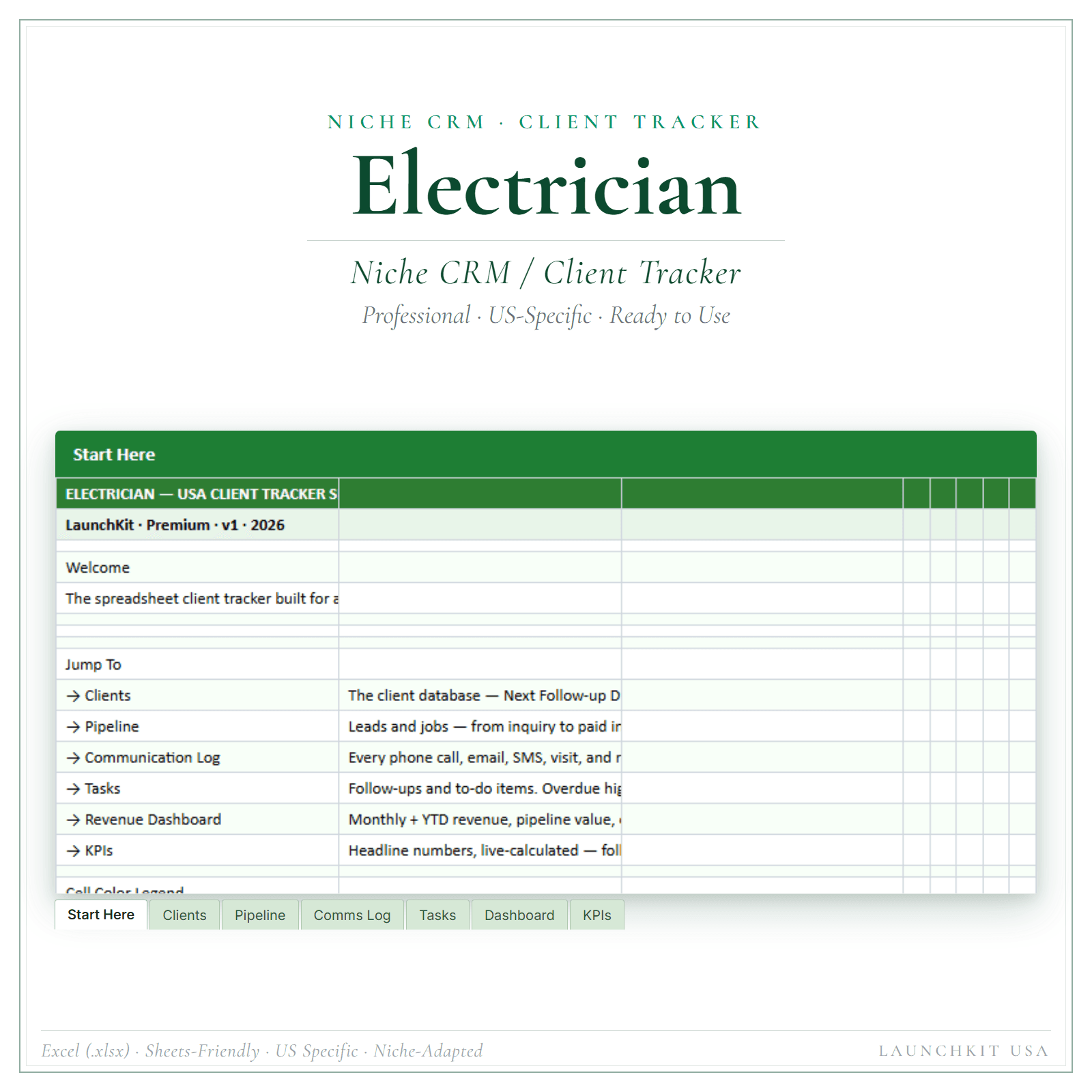
Business Documents — Premium
Made for electricians
$19.99
Keep six core business forms ready to fill, edit, save, and reuse.
Made for your business
Electrical work needs a clear business process around the technical job: recording customer requests, organizing notes, building prices, and following up professionally. These tools focus on that administrative layer, not the technical or regulatory decisions behind the work.
Pick the product that fits how you work. One-time purchase. Download links are emailed after payment.
Made for electricians
$19.99
Keep six core business forms ready to fill, edit, save, and reuse.
A clearer business workflow
An electrical business lives on accurate estimates. A panel upgrade, a run of recessed lights or a new circuit needs a count of every device, labor hours from real past jobs, materials at current prices, any permit fees and a written scope, while a service call needs a clear diagnostic charge before you arrive. The tools on this page support the paperwork side of the trade: a calculator for building quotes from your own costs, an editable menu of common job prices, customer and job records for follow-up, and forms that carry one job from the first inquiry to the invoice.
Keep routine customer details, questions, job notes, and internal paperwork in repeatable formats.
Use your own figures to work through pricing, then present the services and prices you choose in a clear editable layout.
Adapt practical copy for inquiry replies, scheduling updates, completed-work follow-up, reminders, and marketing.
Free reading
Free reading written for US small businesses. Every guide is general information, not legal, tax, accounting, licensing, or insurance advice.
Choosing your tools
Price conservatively at first and start a log. Record every job from arrival to cleanup, drive time included, with the work involved. After a few months you will have your own average time per device, fixture and circuit, which is a better guide than any rule of thumb. The calculator's Job Log is one place to keep those records next to your quotes.
What is included, what is not, and what happens if you find a problem once walls are open. Add payment terms, any deposit, and how long the price is valid, since material prices move. Use the same job reference from estimate to invoice, and get changes approved in writing before you do the extra work.
They are general business and customer-admin tools. Use your required technical records and qualified guidance separately wherever the work calls for them.
The pricing calculator helps you work from your own costs and targets. The business documents and price list help organize and present the information you decide to use.

Requirements can vary by state, city, industry, and business structure. Adapt each file to the way you work. Get qualified legal, tax, accounting, licensing, or insurance advice where needed.