Business Documents — Premium
Made for residential remodeling contractors
$19.99
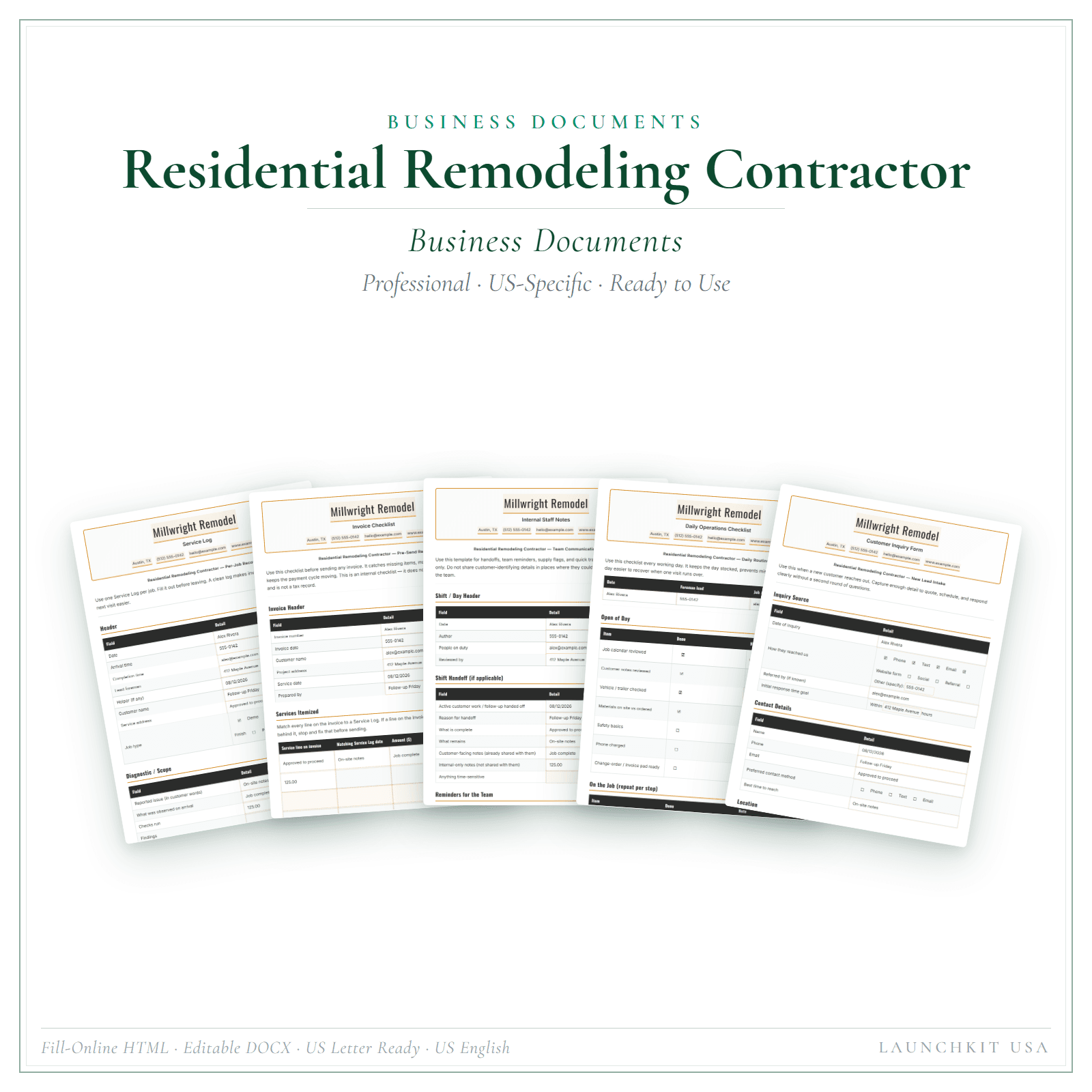
Keep six core business forms ready to fill, edit, save, and reuse.
Made for your business
Running your residential remodeling contractor business means keeping project inquiries, scope notes, estimates, schedules, and client updates organized while hands-on work and customer communication continue. These products give those repeated administrative tasks a practical starting structure, with each page showing the exact format, contents, price, and availability before you choose it.
Pick the product that fits how you work. One-time purchase, instant digital download.
Made for residential remodeling contractors
$19.99
Keep six core business forms ready to fill, edit, save, and reuse.
A clearer business workflow
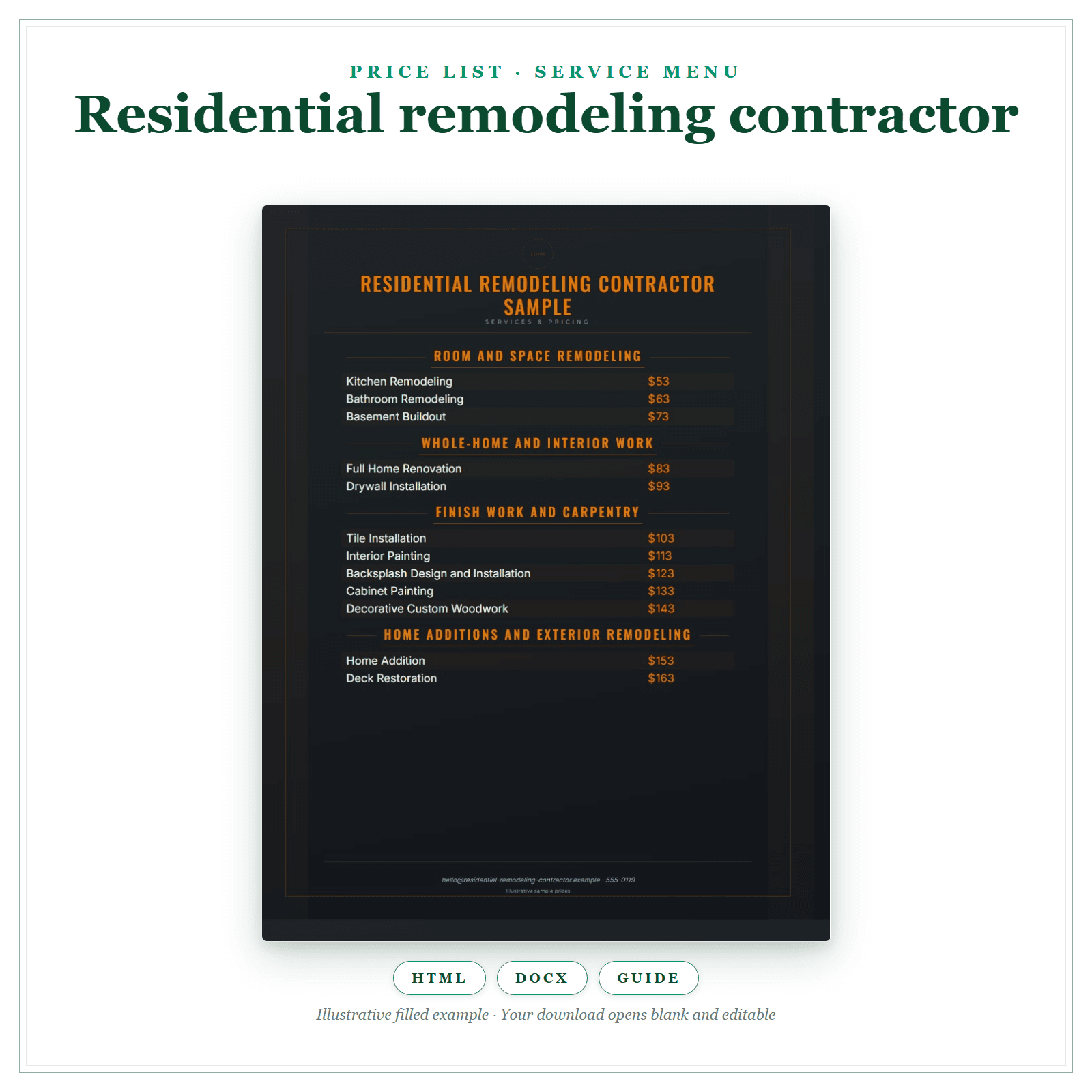
Remodeling estimates carry more risk than most trade quotes. A kitchen or bathroom remodel combines demolition, subcontracted trades, materials with long lead times and conditions nobody can see until the walls are open, so the estimate needs allowances, exclusions and a clear change-order process. Payment schedules tied to project stages keep cash flowing on jobs that run for weeks. The tools on this page help with that paperwork: estimates built from your own labor, materials and markup, an editable price list for rooms, whole-home and finish work, and forms for project inquiries, job records and invoice checks.
Give project inquiries, scope notes, estimates, schedules, and client updates a consistent home so routine information is easier to capture, review, and carry into the next customer or job step.
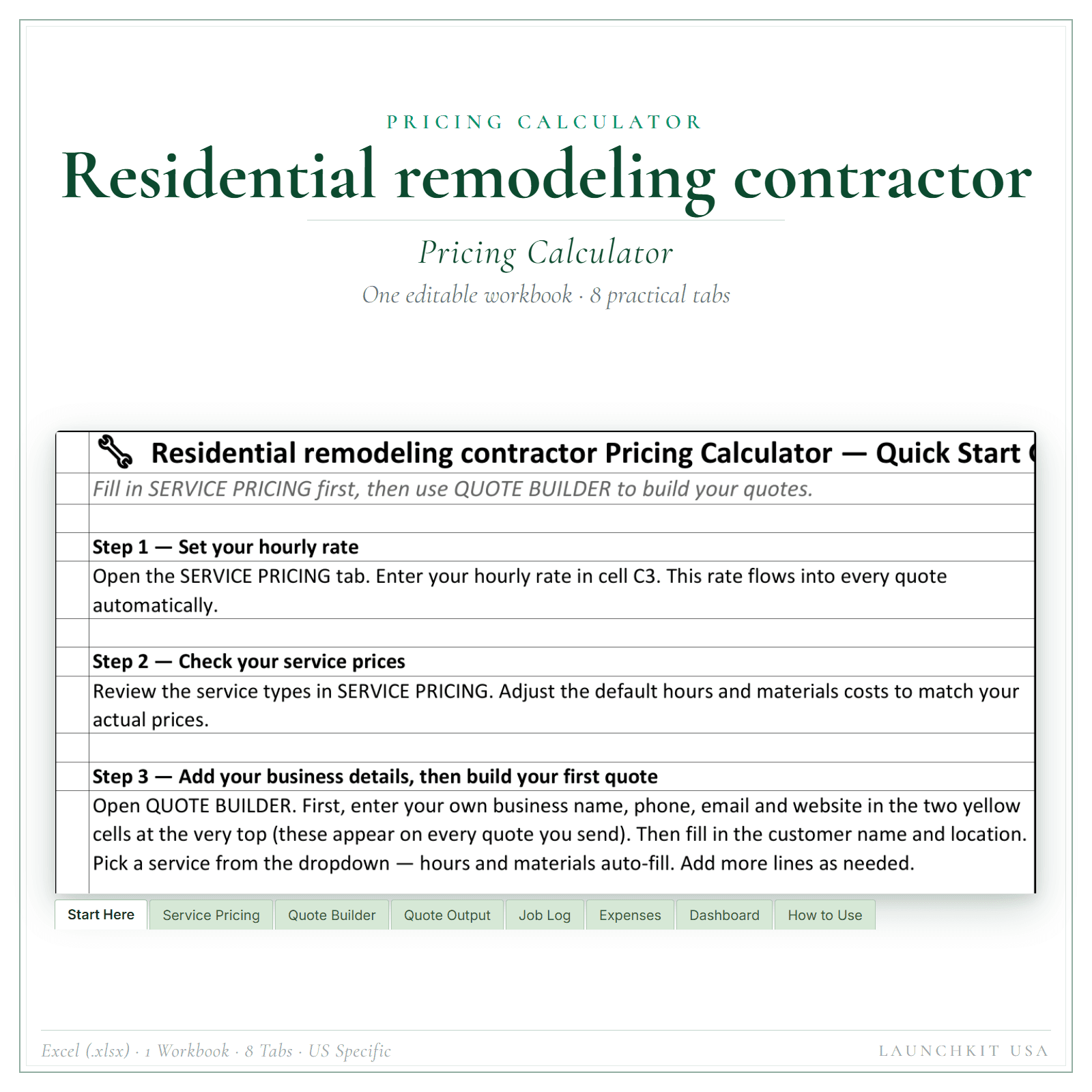
Work from your own time, costs, service choices, and business targets before presenting the prices or packages you decide to use in your residential remodeling contractor business.
Use organized records and editable starting copy to support scheduling, customer updates, reminders, and follow-up without rebuilding the business workflow each time.
Free reading
Free reading written for US small businesses. Every guide is general information, not legal, tax, accounting, licensing, or insurance advice.
Choosing your tools
Treat every change as its own small quote: describe the change, its price and any effect on the schedule, and get the client's written approval before doing the work. Keep each approved change with the project record and show it on the next invoice, so the final bill is easy to explain.
Tie payments to stages the client can see, such as signing, demolition complete, rough-in complete, cabinets installed and the final walk-through, rather than to dates. Some states limit deposits on home improvement contracts, so check with your state contractor licensing board before setting yours, and have your contract reviewed.
Start with the task that currently causes the most repeated work. Choose business documents for routine admin, the calculator for working through prices, or a guide when you are still planning how the business will operate.
Yes. Check the exact formats and contents on each product page, then adapt editable files to your real services, workflow, prices, branding, and customer process before using them.
Requirements can vary by state, city, industry, and business structure. Adapt each file to the way you work. Get qualified legal, tax, accounting, licensing, or insurance advice where needed.